Predictive Maintenance
Predictive maintenance enables early detection of corrosion- and material-related degradation. Measurement data are interpreted in the context of material selection, process media and operating conditions.
Predictive maintenance for industrial applications
Predictive maintenance aims to monitor the actual condition of components either continuously or on demand and to plan maintenance activities based on the real condition rather than fixed service intervals.
Building on successfully implemented applications in the field of high-pressure industrial valves, this concept is transferred to other safety- and quality-critical components. By combining sensor technology, electrochemical measurement methods and materials expertise, MPC² creates transparency regarding loads, degradation mechanisms and corrosion states long before visible damage occurs.
Proven application:
High-pressure valves
In high-pressure systems, valves are among the most safety-critical components. Leakage and failures often develop gradually as a result of corrosion, mechanical overload, temperature fluctuations or unfavorable operating conditions.
Within the framework of a smart valve concept, a sensor-based monitoring system was developed to record axial forces, stresses, temperatures, packing loads and leakage indicators. The resulting data enable early identification of critical conditions and form the basis for condition-based maintenance decisions.
Transferability to other
industrial applications
The predictive maintenance principles established for high-pressure valves can be transferred to a wide range of other industrial applications. Wherever corrosion, mechanical loads, temperature effects and changing process media interact, comparable degradation mechanisms can be expected.
Typical applications include pipelines and welds, flanges and sealing systems, valves and pumps, as well as pressure-bearing components in corrosive or high-purity process environments.
Feel free to contact us to discuss your specific application. Together, we will develop a technically sound predictive maintenance solution tailored to your requirements.
The role of MPC²
Predictive maintenance does not end with data acquisition. The decisive factor is the technical interpretation of measurement data in the context of material selection, process media and operating conditions.
MPC² combines sensor technology and electrochemical measurement methods with in-depth expertise in materials engineering and corrosion science. This results in technically robust recommendations for optimizing materials, processes and maintenance strategies.
Products & Technologies
Corrosion Ray®
Portable Metallography
Sensor technology for digital data evaluation
Corrosion Ray®
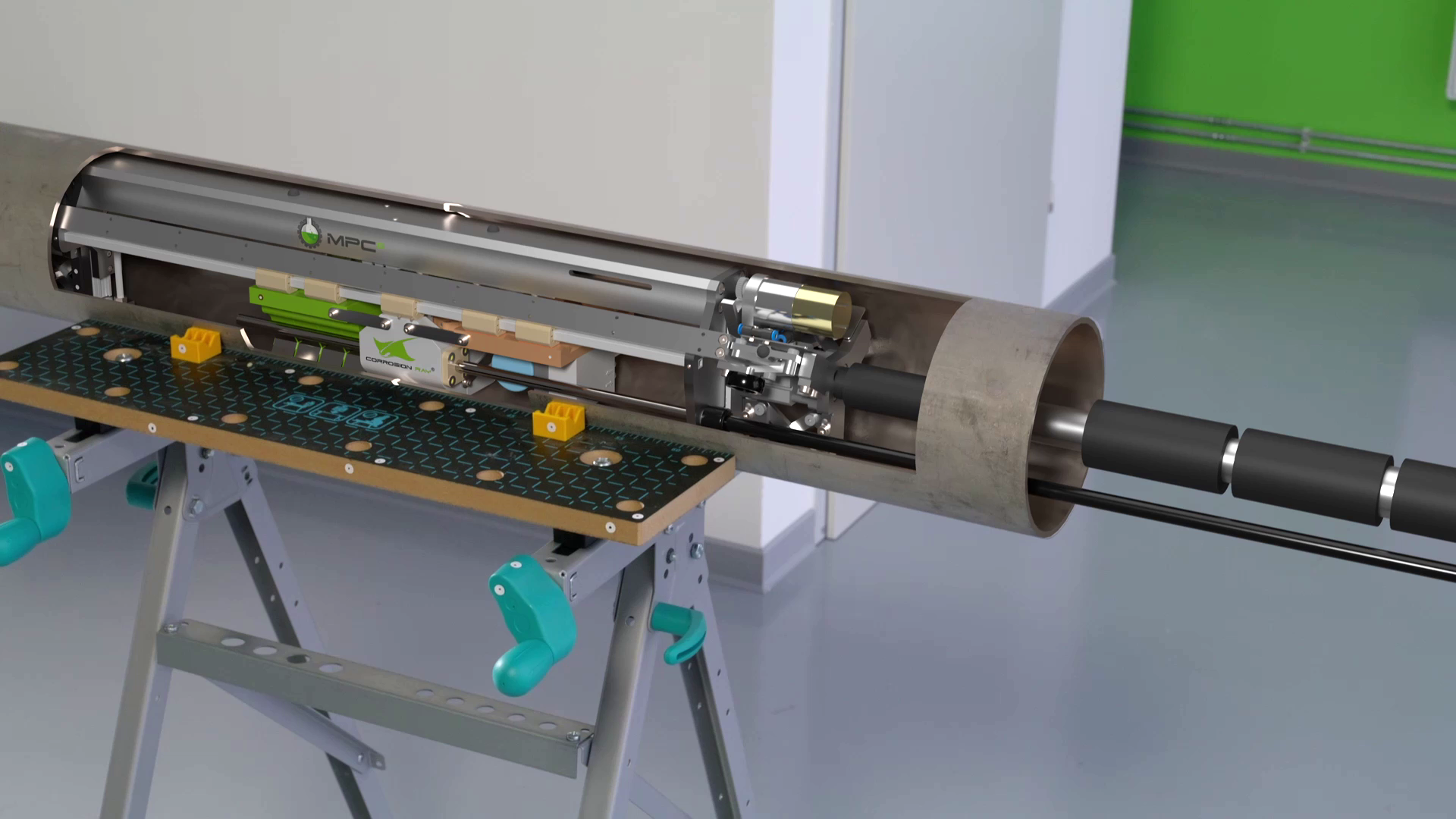
Corrosion Ray® – non-destructive electrochemical condition assessment directly at the component
Corrosion Ray® is the world’s first portable electrochemical measurement system for the non-destructive determination of the corrosion resistance of metallic materials directly on components. It combines laboratory-grade precision with industrial robustness – enabling a new era of fast, sustainable and cost-efficient materials testing.

The system combines state-of-the-art electrochemical techniques with a compact and rugged design.
- Non-destructive measurement directly on the component (no sample extraction required)
- Temperature-controlled test cell with integrated heating and cooling system
- Circulation unit for electrolyte homogenization
- Gas purging (argon / nitrogen) for oxygen-free test atmospheres
- Modular, 3D-printed PVDF measurement cell
- Vertical, horizontal and overhead application possible
- Drone compatibility for hard-to-reach inspection areas
- Precision positioning unit for internal and external surfaces
- Compact potentiostat (≤ 120 × 70 × 30 mm)
- Compatible with DL-EPR, EIS, PDP and OCP measurements
Corrosion Ray covers a broad range of industrial applications:
- Materials development & testing: Rapid assessment of semi-finished products, raw materials and coatings – for raw material producers and materials processors
- Process & quality assurance: Analysis of finished components after welding or manufacturing steps – for manufacturers of pressure vessels, piping and valves
- Maintenance & inspection: Regular on-site testing during plant operation – for operators of petrochemical plants and energy facilities
For manufacturers
- Reduction of penalty costs
- Shorter delivery times and improved competitiveness
- Increased process reliability and operational safety
For plant operators
- Extended maintenance intervals and higher plant availability
- Avoidance of unplanned shutdowns
- Improved operational safety
- 99 % lower energy consumption
- 95 % lower acid consumption
- 80 % lower water consumption
Portable Metallography
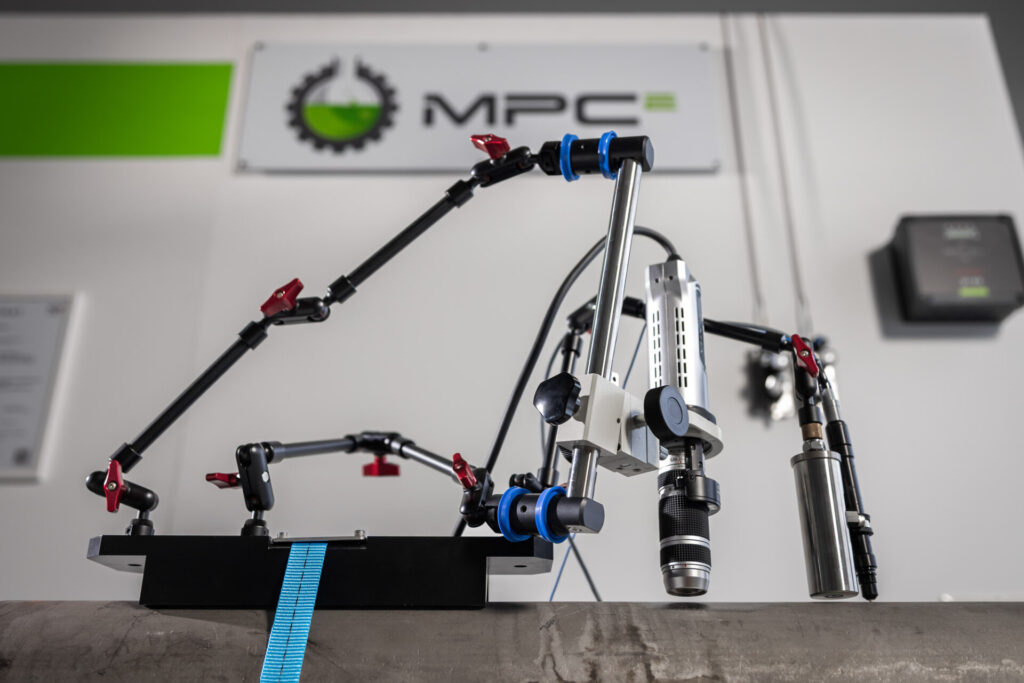
In many industrial applications, conventional metallographic sample removal is either impractical or not permissible. MPC² has developed specialized holding and positioning fixtures for high-resolution digital microscopy, enabling direct microstructural evaluation on real component surfaces.
In addition, we employ portable grinding and polishing equipment to achieve defined surface preparation directly on-site. Electrochemical etching techniques can be applied as an advanced step to reveal microstructural features and accurately assess material conditions.
This allows fast and non-destructive evaluation of microstructure, heat treatment states, and corrosion-relevant material changes – ideally suited for field inspections, failure analysis, and quality assurance.
Sensor technology for digital data evaluation
Sensor technology for digital data evaluation
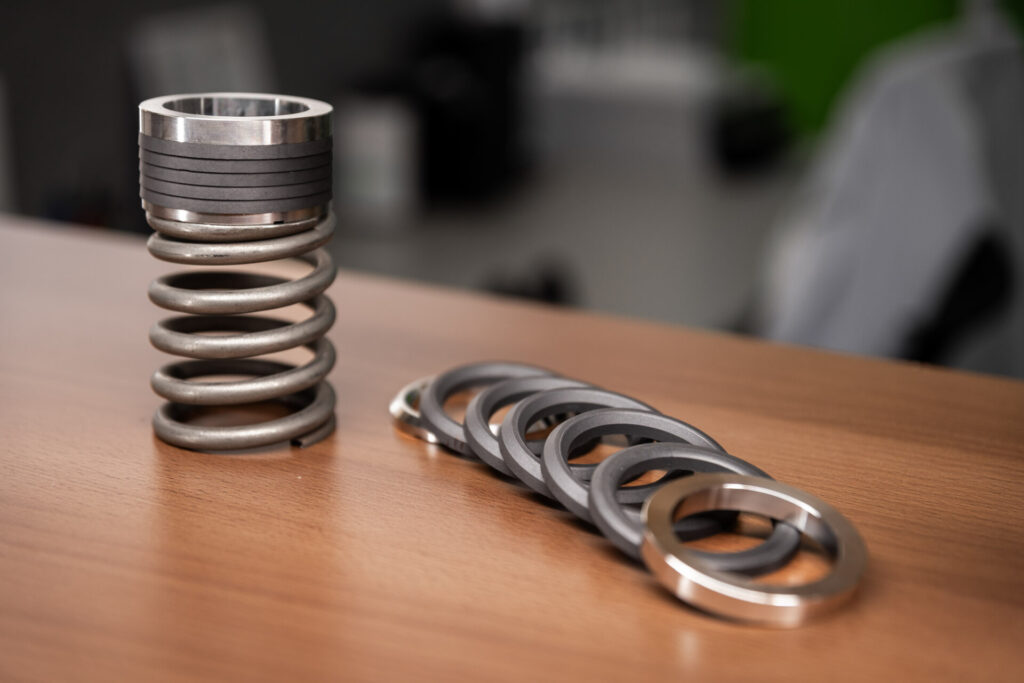
A key innovation of the smart valve concept is the self-energized valve packing, designed to dynamically adapt to pressure and temperature changes. It significantly improves long-term sealing performance and extends maintenance intervals. The technology can be integrated into standard valve designs and offers retrofit potential for existing plants.